
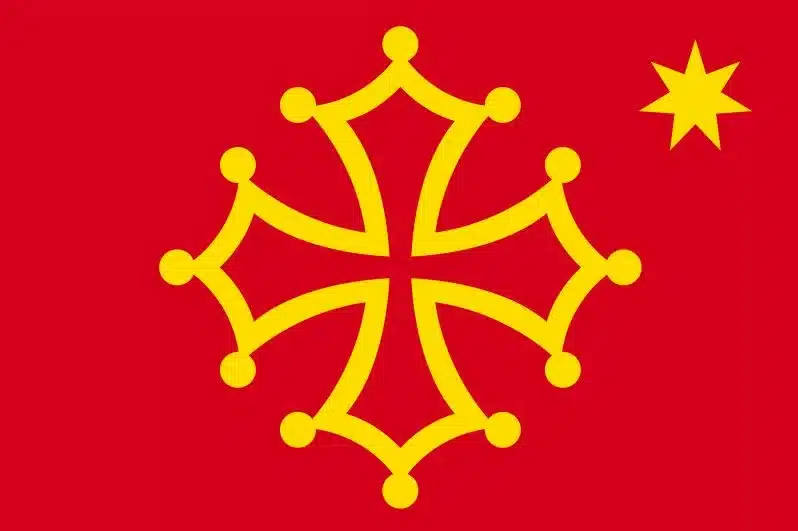
Sometimes all it takes is a sign to make borders waver.
You are driving in the Italian Alps, somewhere between Oulx, Pragelato, Ostana, Chianale, Elva or VinadioEverything around you seems undeniably Piedmontese: the license plates, the cafes, the signs, the administration, this very Italian way of bringing the village square to life. Then a second name appears beneath that of the town. An inscription begins with Lou, La, ValadaA poster displays a yellow Occitan cross on a red background. A few kilometers away, a festival announces a courento Elsewhere, a museum talks about Occitan language.
You are still in Italy.
But you are also in Occitanie.
Not within a political Occitania, whose borders it would be futile to search for on an administrative map, but within a vast linguistic and cultural space stretching from the Piedmontese Alps to the Pyrenees and the Spanish Val d'Aran, traversing the entire south of France. The Piedmont Region officially recognizes this presence: the historical Occitan minority occupies a series of high valleys in the Western Alps, from the upper Susa Valley to the Monregalese valleys, and the language benefits in Italy from the protection provided by National Law 482 of 1999 concerning historical linguistic minorities.
That's what makes the Occitan valleys of Piedmont so fascinating.
Their culture does not stop at the Franco-Italian border because it is, to a large extent, older than this borderThe mountain passes that today seem to separate states have long connected communities. The Montgenèvre Pass linked Briançon to Oulx. The Agnel Pass connected the Queyras and the Val Varaita. The Larche Pass linked the Ubaye Valley to the Valle Stura. Shepherds, traders, peddlers, religious figures, and artisans crossed these ridges long before Paris and Turin decided where a border should lie.
This is also why one question often comes up: If these valleys have long belonged to Piedmont and part of them were dominated by the House of Savoy, why is their culture not “Savoyard”?
Because language, culture, and political sovereignty are not the same thing.
And to understand it, you have to travel through the valleys one by one.
But where exactly are the Occitan valleys of Piedmont located?
We often speak of the "Occitan valleys" as a single continuous territory. On the ground, the reality is more like a fan.
From the Po Valley, the valleys extend westward toward the French border. Some are long and deeply incised; others are merely short furrows dominated by steep mountains. To the north, they belong to the metropolitan province of Turin; further south, most of them lie in the province of Cuneo.
The cultural classification used by the Chambra d'Òc traditionally distinguishes twelve sets:
- Alta Valle di Susa,
- Val Chisone,
- Val Germanasca,
- Val Pellice,
- Valle Po,
- Valle Varaita,
- Maira Valley,
- Valle Grana,
- Valle Stura di Demonte,
- Valle Gesso,
- Valle Vermenagna
- and Valli Monregalesi.
The map published by the Piedmont Region also reflects this great Occitan continuity along the western Alpine arc, but traversing them from north to south is like undertaking a real journey through several Alps.
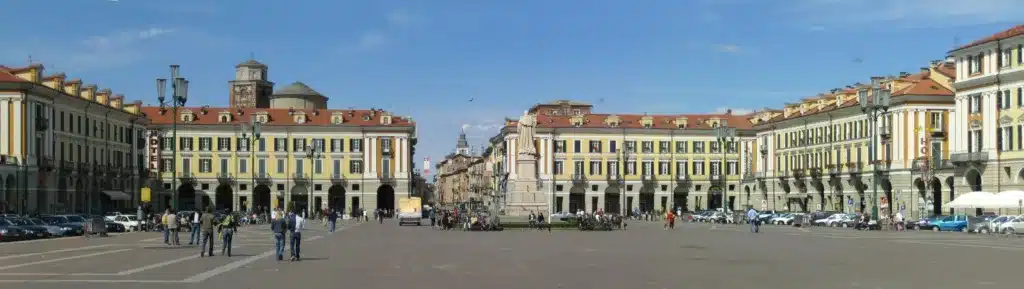
Why are these valleys considered Occitan when they are Italian?
The answer now becomes simpler.
Because Italy is more recent than the Occitan language..
Occitan belongs to the large family of Romance languages, which evolved from Vulgar Latin after the fall of the Roman Empire. In the Middle Ages, it became the language of a brilliant literary civilization, notably that of the troubadours. Its historical territory extends over a a large part of the south of present-day Francebut also in some valleys of the Italian Alps and Spanish Val d'AranThe Piedmont Region reminds us that linguistic Occitania now extends across three states: Italy, France and Spain.
The mountains have never prevented this continuity and have even sometimes promoted it.
Numerous mountain passes allow direct communication between the valleys. A community could be politically attached to the Dauphiné, the Marquisate of Saluzzo or the House of Savoy while speaking a language belonging to the same group as that used on the opposite slope.
National borders came much later.
Why aren't they simply "Savoyard"?
This is where a distinction must be made. three levels: political, linguistic and cultural.
The House of Savoy gradually came to control a large part of western Piedmont. But its states were deeply multilingual. Piedmontese, Franco-Provençal, French, Occitan, and other Romance languages were spoken there.
"Savoyard" therefore does not refer to a single language spoken everywhere the dynasty reigned.
In the upper valleys of Susa and Chisone, some communities had previously belonged to the Le Dauphiné and only came under Savoyard authority after the Treaty of Utrecht in 1713.
Further south, several valleys have long been linked to marquisate of Saluzzo, an independent state whose artistic influence remains visible in Saluzzo, Manta, and Elva. Dronero, for example, came under the control of the marquisate at the end of the 13th century and only became Savoyard after the Treaty of Lyon of 1601.
In other words, when the House of Savoy took possession of these territories, The people there have been speaking their Alpine languages for centuries..
The sovereign changes, but the village language changes much less quickly. Today, these languages are still very much alive because they are spoken by young people as well.
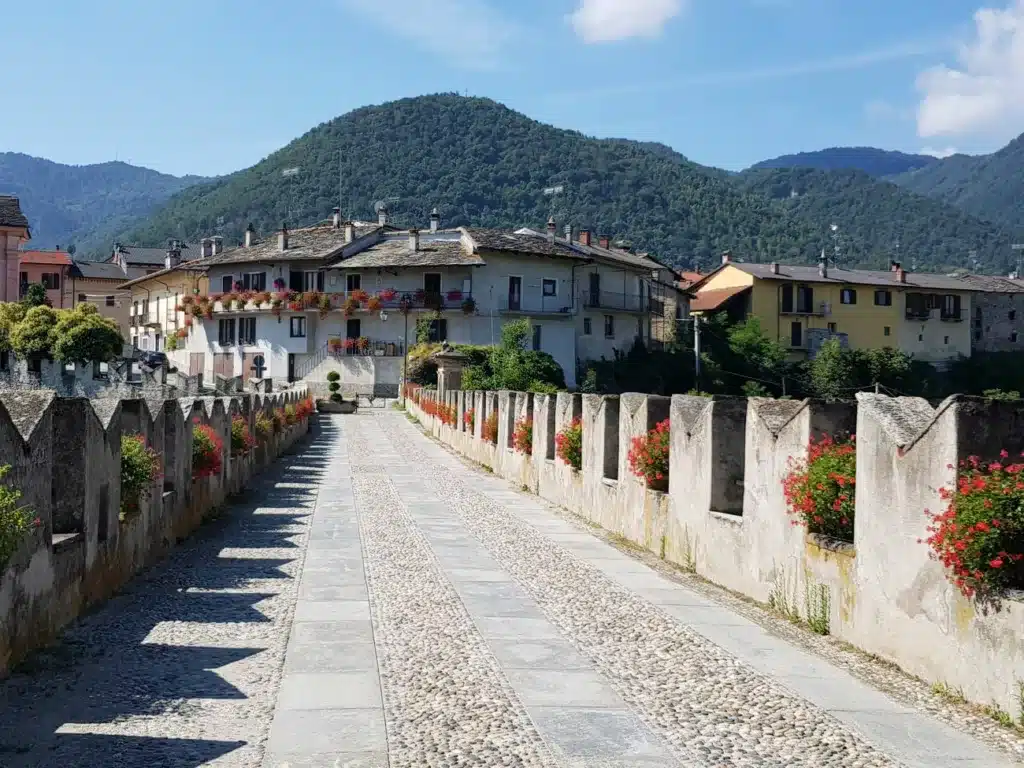
One language, but a multitude of dialects.
Saying "the Occitan of the Piedmontese valleys" does not mean that everyone speaks in exactly the same way from Bardonecchia to Valle Gesso.
Quite the contrary.
The valleys have long been relatively isolated from each other during the winter and each community has developed its own phonetic, lexical and grammatical characteristics.
Alpine Occitan generally belongs to the domain vivaro-alpine, but local variations are considerable. The Piedmont Region and the Chambra d'Òc both emphasize this internal diversity.
A resident of the Maira Valley can therefore recognize the language of a speaker from the Pellice Valley while also noticing immediately perceptible differences. This diversity is not a weakness but simply the result of centuries of mountain life.
The Occitan cross in the middle of the Italian Alps
Today, one of the most visible signs of this cultural revival is the Occitan cross, yellow on a red background.
It can be seen on billboards, festival posters, tourist brochures, and flags hanging from houses. It obviously hasn't always flown in Piedmontese villages like a national flag.
Its contemporary use reflects rather the desire to make visible a cultural affiliation long considered a mere "patois" without prestige.
The Occitan revival movement gained significant momentum during the second half of the 20th century. Associations, researchers, musicians, and writers rehabilitated the language, collected stories, recorded former speakers, and re-established connections between the different valleys. The Chambra d'Òc, active from Bardonecchia to the southern valleys, plays a vital role in this transmission today.
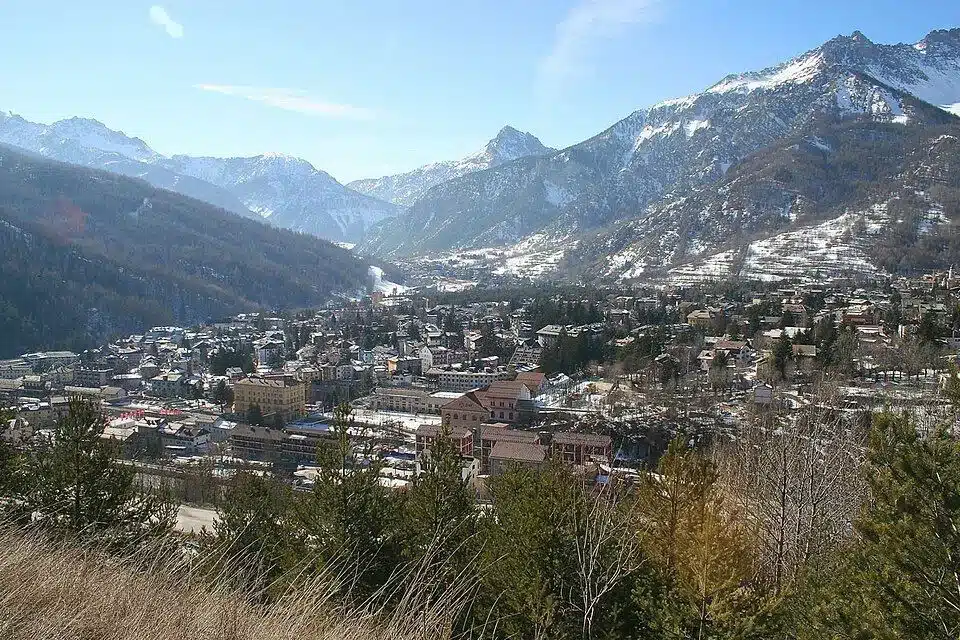
Courento, music and festivals: when culture is danced
Occitan culture is not just a language that you learn from a book. It is danced.
In several valleys of Piedmont, the courento remains one of the emblematic traditional dances. The forms vary according to the region, accompanied by other dances such as the ballet or, in Val Varaita, certain local variants documented by collectors of musical traditions.
The instruments have evolved over time.
Hurdy-gurdies, violins, diatonic accordions, and other folk instruments accompany dances and celebrations. Some contemporary groups now use these melodies, blending them with folk or modern influences.
In the villages, this music has a special importance: it allows generations who no longer necessarily speak Occitan fluently to maintain an emotional connection with the language.
A song memorized during childhood can convey what a lesson will never fully convey.
A culture shaped by migration as much as by rootedness
It would be misleading to portray the Occitans of the valleys as a static population forever tied to the same village. The mountains, in fact, forced them to move. Peddlers, artisans, shepherds, and seasonal workers regularly left their valleys. acciugai de la Valle Maira travelled the roads to sell anchovies; other communities supplied artisans, servants or traders to the towns of the plain and beyond.
This mobility also explains the circulation of words, recipes, songs, and techniques. Alpine Occitan culture was therefore not born of isolation. It arose from a balance between an extremely strong rootedness in the valley and an amazing ability to travel.
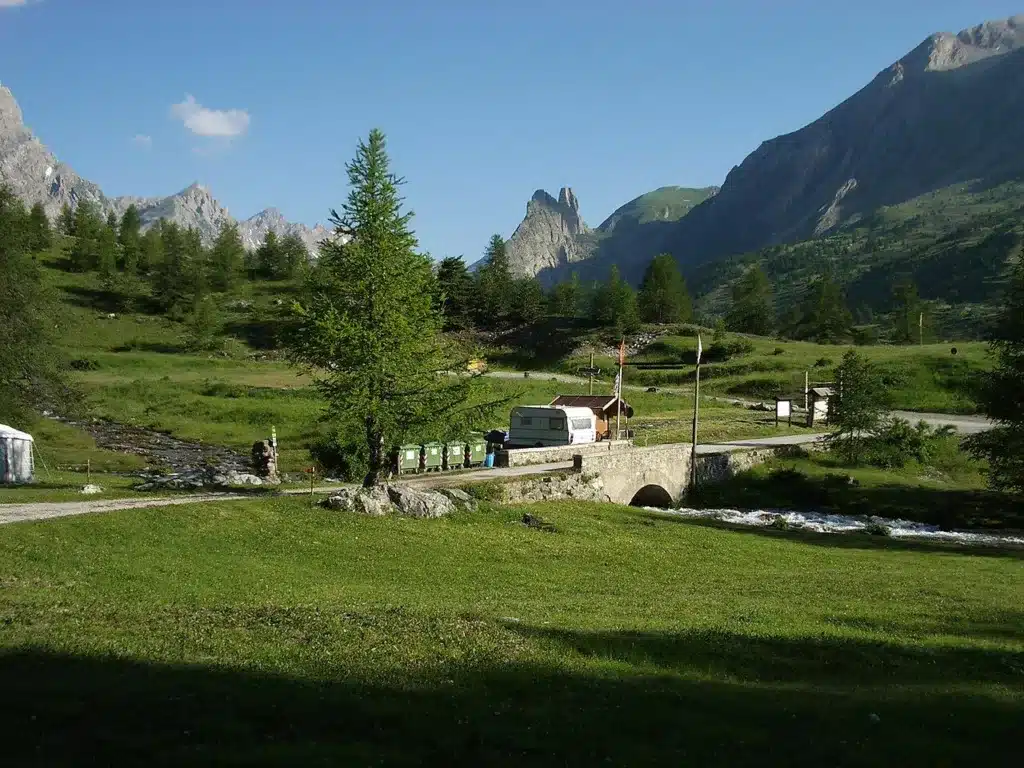
What do people eat in the Occitan valleys?
There is obviously no single Occitan cuisine any more than there is a single architecture.
But several constants recur: mountain cuisine, the need to preserve food, the promotion of potatoes, rustic cereals, cheeses, chestnuts and products from alpine pastures.
In Valle Varaita, the ravioli have become iconic.
In Valle Grana, the Castelmagno It directly depicts the high-altitude pastures.
In Valle Maira, the tradition of anchovies It evokes the long merchant migrations. Visit Cuneese thus associates potatoes and mountain cheeses with ravioli and anchovies with bagna cauda, showing how mountain cuisine and the movement of people come together.
In Ostana, potato and buckwheat polenta served with local tome cheese perfectly encapsulates a cuisine born from the resources available at high altitudes. Here again, gastronomy is a map.
Occitan Valleys: folklore or a living reality still today?
Espaci Occitan in Dronero: understand the language before heading back into the valleys
For those who want to go beyond the landscapes, Dronero constitutes an essential step.
The Occitan Space houses the Museo Sòn de LengaA sound museum dedicated to the Occitan language and culture. Audio devices allow visitors to listen to sounds and discover literature, music, history, and various aspects of social and material life. The experience is offered in several languages, including Occitan, Italian, and French.
This is probably the best place to understand that Occitania isn't some lost province that one might try to reconstitute. It exists through language. And language connects very different regions. After this visit, returning to the villages of the Maira, the Varaita, or the Valle Po completely changes your perspective.
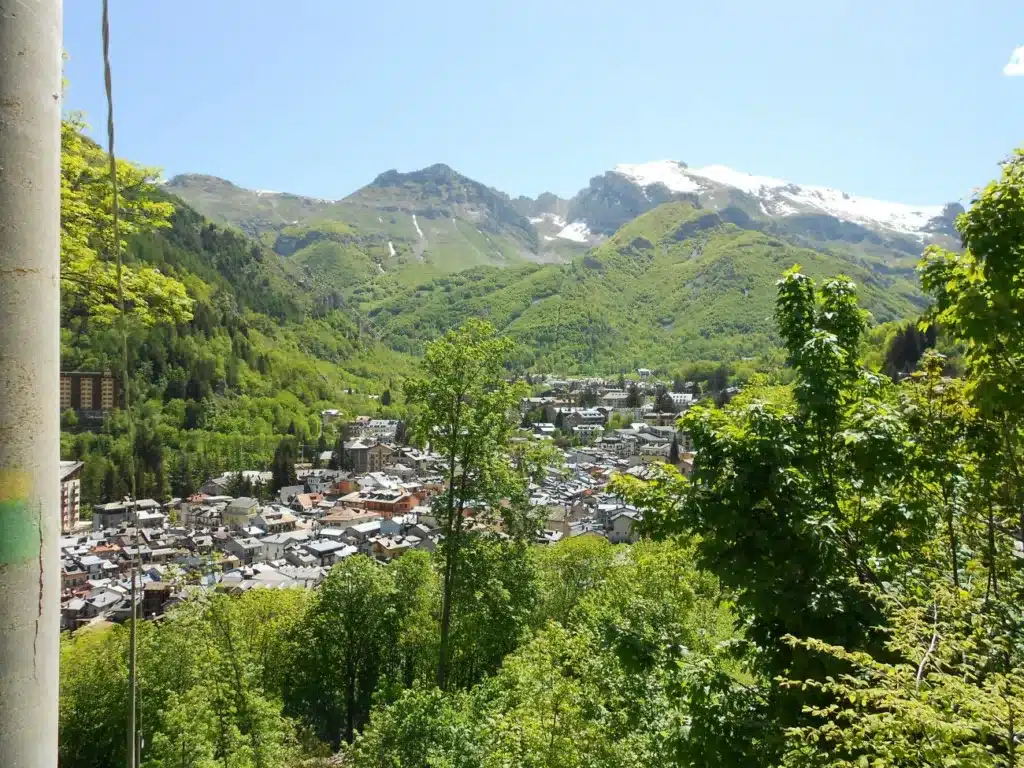
Why does the Occitan language still live in Piedmont?
Family transmission declined sharply in the 20th century, as in most European regions where minority languages faced competition from national languages.
Schools, the media, urbanization, and migration to cities have reinforced the use of Italian. Yet, Occitan has not disappeared.
From 1999Italian Law 482 officially recognizes historical linguistic minorities and allows, in particular, the funding of initiatives related to education, administration, and place names. In Piedmont, Occitan is among the explicitly protected languages, along with French, Franco-Provençal, and Walser. The Region continues to fund projects led by local authorities.
- Courses are being organized.
- Language assistance desks exist.
- Publications are being released.
- Traditional place names are being brought back into use.
- The Piedmont Region also supports research and educational activities dedicated to its linguistic heritage.
The language now possesses something it had long since lost: public legitimacy.
Ostana, Dronero, Pragelato: Occitan culture no longer just wants to survive
Perhaps the most interesting change lies here. In several valleys, Occitan is not presented as a memory of a vanished civilization but as a tool for imagining the future.
- In Ostana, architectural heritage, culture and repopulation are linked.
- In Dronero, Espaci Occitan works on language transmission.
- In Pragelato, Occitan identity accompanies the promotion of local heritage.
In several municipalities, language courses, events, music, and school projects allow new generations to rediscover a culture they may not have received directly from their parents. Training programs recently offered under Law 482/1999 demonstrate that this policy of cultural transmission remains active.
It is perhaps precisely because the language almost disappeared from everyday use that it is now being claimed with such force.
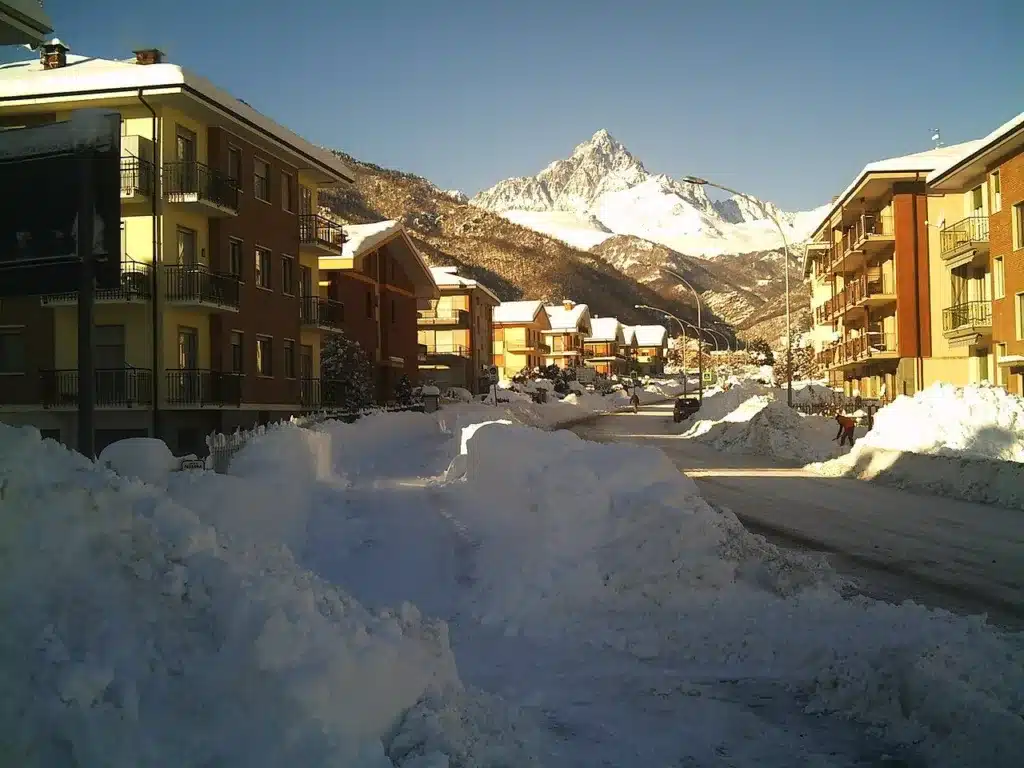
Are the Occitan valleys French, Italian or Occitan?
The question is badly posed.
They are Italian politically.
They are geographically and historically Piedmontese.
And they belong to the Occitan cultural space through their linguistic heritage.
These three realities are not mutually exclusive. In fact, that is the very richness of the territory.
For centuries, the valleys belonged to different states: Dauphiné, the Marquisate of Saluzzo, the Duchy of Savoy, the Kingdom of Sardinia, and then Italy. The rulers changed, the borders advanced or retreated, the administrative languages succeeded one another, but the people continued to name their mountains, their streams, their tools, and their daily actions with words inherited from previous generations.
That is why we find Occitan valleys in Italy today.
Not because a population from France had recently crossed the border, but because the border crossed a cultural territory that already existed.
Piedmontese Occitania is therefore not a folkloric curiosity stuck between two borders; it tells a much more important story about the Alps: for centuries, The mountains have not only separated peoples: they have connected them..
Perhaps this is what the Occitan flags that fly in the villages of Piedmont still tell us today: not the nostalgia for a vanished border, but the memory of a world where culture had long known how to cross mountains.
Photo Credits:
Bardonecchia:Bryan Allison from Las Vegas, NV, USA, CC BY-SA 2.0 , via Wikimedia Commons // https://upload.wikimedia.org/wikipedia/commons/9/97/Bardonecchia_%28102169896%29.jpg?utm_source=commons.wikimedia.org&utm_campaign=index&utm_content=original

Paesana and Monviso: Supermferdi, CC BY-SA 3.0 , via Wikimedia Commons // https://upload.wikimedia.org/wikipedia/commons/9/92/Il_Monviso_visto_da_via_Crissolo_a_Paesana.JPG?utm_source=commons.wikimedia.org&utm_campaign=index&utm_content=original

Dronero Ponte del Diavolo: Ale zena, CC BY-SA 4.0 , via Wikimedia Commons // https://upload.wikimedia.org/wikipedia/commons/e/ea/Dronero-Ponte_del_Diavolo-20180808_111108.jpg?utm_source=commons.wikimedia.org&utm_campaign=index&utm_content=original

Cuneo piazza Galimberti: https://commons.wikimedia.org/wiki/File:Cuneo_Piazza_Galimberti.jpeg

Limone panorama: Stefano59Rivara, CC BY-SA 3.0 via Wikimedia Commons// https://upload.wikimedia.org/wikipedia/commons/2/22/Limone_dall%27alto.JPG?utm_source=commons.wikimedia.org&utm_campaign=index&utm_content=original

Chiappera: paebi, CC BY-SA 4.0 , via Wikimedia Commons // https://upload.wikimedia.org/wikipedia/commons/7/7e/Chiappera04.jpg?utm_source=commons.wikimedia.org&utm_campaign=index&utm_content=original

You might also be interested in these articles:
From the Écrins mountains to Piedmont, following in the footsteps of the Waldensians, reformers of the Alps
Trace the journey of the Waldensians, a reformed religious community, through the Alps between Hautes-Alpes and Piedmont, between history, heritage and unmissable landscapes.

Escartons: a cross-border territory in the Alps between Dauphiné and Piedmont
What is the territory of the Escartons? During a visit to the Piedmontese Alps, the Queyras or the Briançonnais, discover the amazing history of these autonomous alpine communities.
What to see in the 12 Occitan Valleys of the Italian Alps?
Discover the 12 Occitan valleys of Piedmont: villages, landscapes, heritage and traditions of an Alpine culture that transcends borders.
Around Monte Rosa, the land of the Walser
Discover the history and Walser heritage in the valleys around Monte Rosa. Between Valais, Aosta Valley and Piedmont, a common thread unites these highlands at the foot of the glaciers.

What to do at Lake Orta, a romantic gem near Lake Maggiore?
What to do at Lake Orta? Visit Orta San Giulio, San Giulio Island, Sacro Monte, Omegna, the most beautiful panoramas, hikes and access points near Lake Maggiore.

The most beautiful villages around Stresa, on the shores of Lake Maggiore
Explore the most beautiful villages around Stresa: Baveno, Belgirate, Verbania, Pallanza, Mottarone and the Borromean Islands along Lake Maggiore.

The Borromean Islands: Discover the jewels of Lake Maggiore
Visit the Borromean Islands: Isola Bella, Isola Madre and Isola dei Pescatori. History, palaces, gardens, access, tips and panoramas of Lake Maggiore.

What to do in Stresa? Discover the elegant pearl of Lake Maggiore
Discover Stresa, the most elegant resort on Lake Maggiore: stroll along the shores, Belle Époque villas, gardens, panoramas, Mottarone and the Italian dolce vita.

My articles on the heritage and history of the Alps
Find here all the articles I have written on the history of the Alps and the House of Savoy on the media “Nos Alpes”
Three major passes in the Southern Alps: Larche, Lombarde and Bonette
Explore this high-altitude route between Ubaye, Piedmont and Tinée: Mexican villas, sanctuaries and wild passes.
Itinerary in the Alps between France and Italy: Mont Cenis and Montgenèvre passes
Between Mont-Cenis and Montgenèvre, follow a thousand-year-old road between strategic passes, forgotten forts and Alpine towns steeped in history.
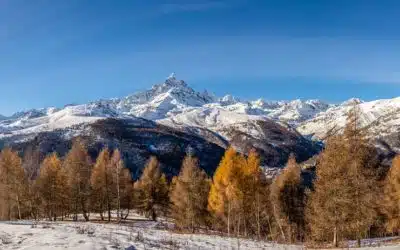
Discover the Piedmont Alps near Turin
From Turin, set off to visit Piedmont, a region rich in heritage, magnificent alpine landscapes and gastronomy.
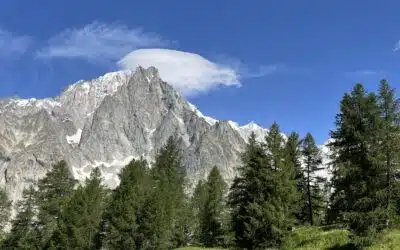
Italian Alps: wild nature and exceptional villages
Large lakes, glaciers, typical villages and refined gastronomy make the charm of the Italian Alps

How to choose among the Lakes of Northern Italy?
La Dolce Vita in the mountains. The Mediterranean in the Alps.
AlpAddict knows all the secrets of these jewels.
The Alps of Piedmont, Aosta Valley and Lombardy
AlpAddict lets you discover the beauties of the Piedmont Alps, the Aosta Valley and Lombardy, between mountains and gastronomy.